1. Work IQ and Autopilot: AI That Already Knows Your Job
The biggest bottleneck for workplace AI has always been context. An AI assistant isn’t very useful if you have to spend twenty minutes explaining your project history before it can write a single email.
Because most organizations already run on Outlook, Teams, Word, and Excel, their daily emails, meeting notes, documents, and chat threads live inside the Microsoft ecosystem. At Ignite 2026, Microsoft showcased Work IQ (part of its broader Microsoft IQ platform), an enterprise context layer that allows AI agents to read across your company’s data—strictly respecting the access permissions you already have.
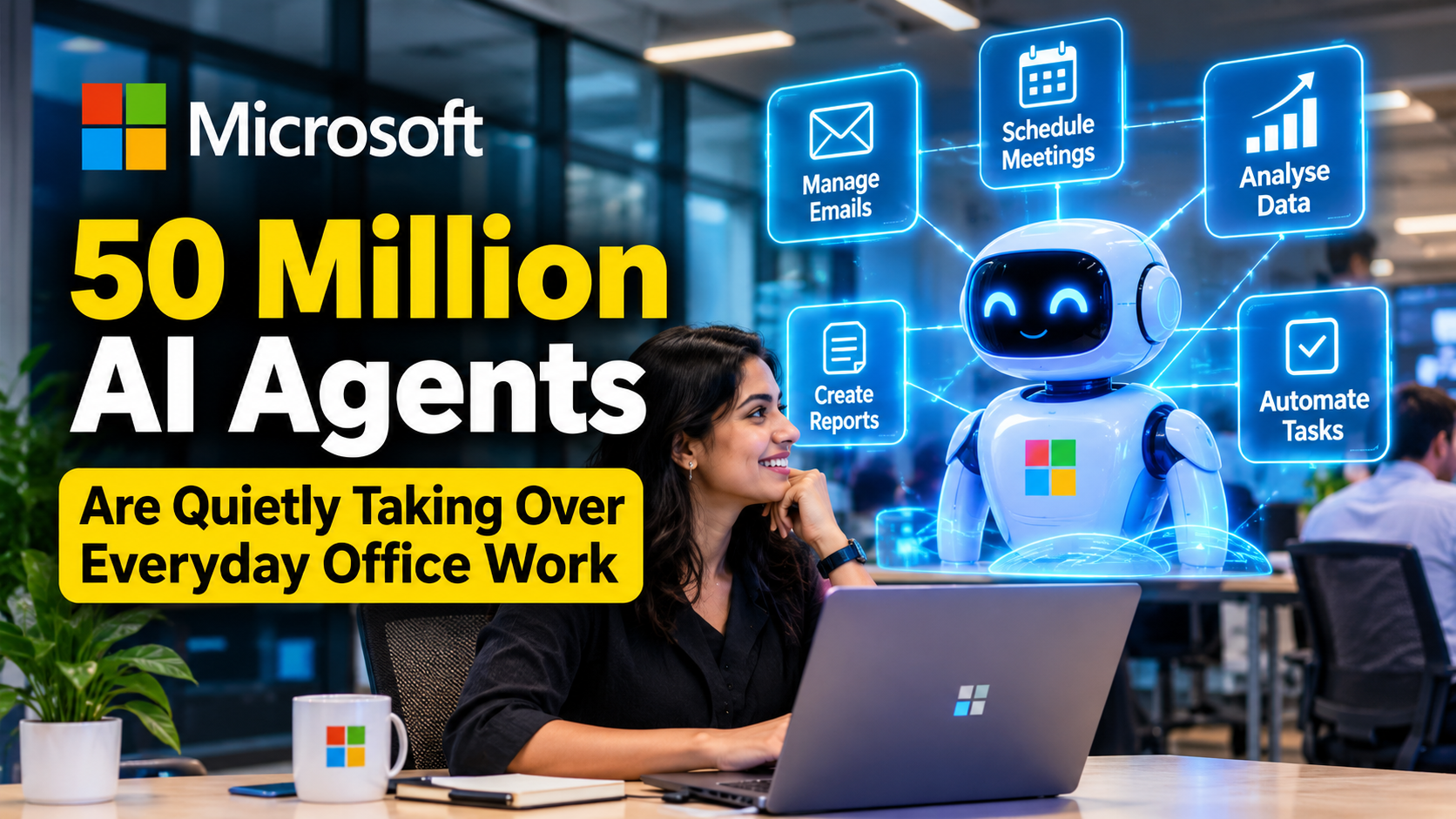
At the same time, Copilot has evolved into a unified workspace combining chat, coworking, coding, and Office applications. Paired with Autopilot, an autonomous agent designed to run around the clock, employees no longer have to micromanage every step. Routine busywork—like digging through old chat threads, sending follow-ups, and compiling status reports—can happen automatically in the background.
2. Agent 365: Keeping 50 Million Agents Under Control
When a single company deploys thousands of autonomous agents that can read emails, update files, and trigger workflows, management and security quickly become top concerns.
That is where Agent 365 comes in. Acting as a dedicated control plane for enterprise AI, it gives IT and security teams visibility, identity management, and governance over every agent operating inside the organization. Instead of rogue or untracked bots accessing sensitive files, every agent is registered, monitored, and bound by corporate policies.
To strengthen defenses further, Microsoft also rolled out general availability for an AI-driven security architecture built around specialized red, blue, and green teams of AI agents—continuously simulating attacks, defending vulnerabilities, and maintaining system resilience at machine speed.
3. Maia 300: Custom Chips Built for Agentic Scale
Running millions of continuous, background AI agents requires massive computing power—and traditional GPU clusters consume enormous amounts of electricity.
To solve the infrastructure side of the equation, Microsoft unveiled its next-generation custom AI silicon, the Maia 300. Designed specifically for high-throughput AI workloads, Microsoft expects Maia 300 to deliver 40% more tokens per megawatt than leading GPU systems. For businesses, higher energy and compute efficiency translates directly into faster, more affordable AI agents that can stay active 24/7 without driving up cloud costs.
What This Means for Professionals and Business Owners
Microsoft’s strategy at Ignite 2026 sends a clear signal: the future of workplace AI isn’t another app on your desktop—it’s an invisible layer running underneath the apps you already use.
For business owners, managers, and everyday professionals, the competitive advantage is shifting from who writes the best prompts to who best organizes their workflows so autonomous agents can safely handle repetitive execution.
Tags
Microsoft Ignite 2026, Agent 365, Work IQ, Microsoft Copilot, Maia 300, AI Agents, Enterprise AI, Workplace Productivity, AI & Technology, Rozana Updates